Our Story
The Sacred Art of Sree Gandhaan Paintings
A Legacy of Devotion
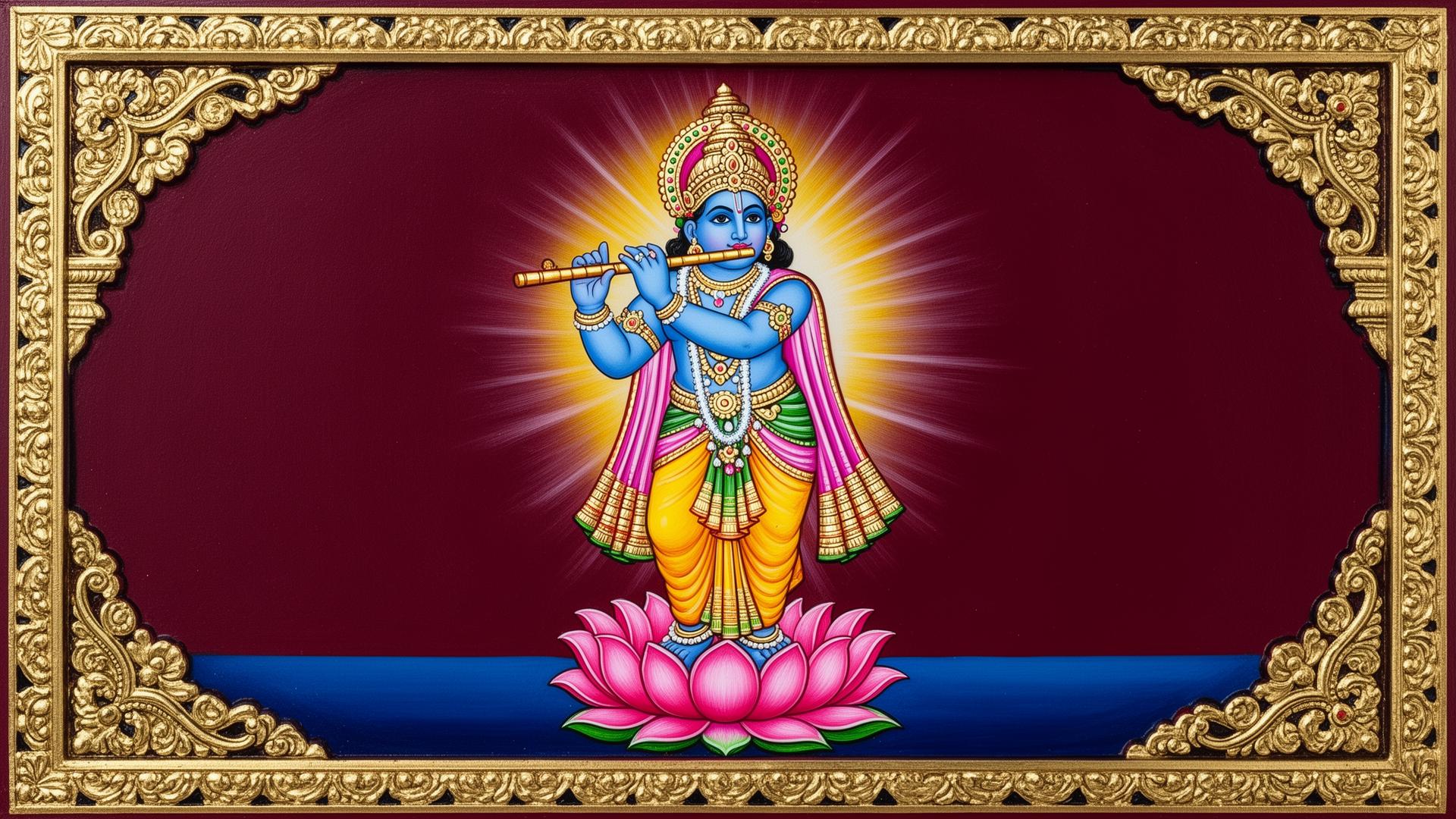
Sree Gandhaan painting is a classical South Indian art form that originated in the town of Thanjavur (anglicized as Sree Gandhaan) in Tamil Nadu, India, around the 16th century. This magnificent art form flourished under the patronage of the Maratha rulers of Thanjavur.
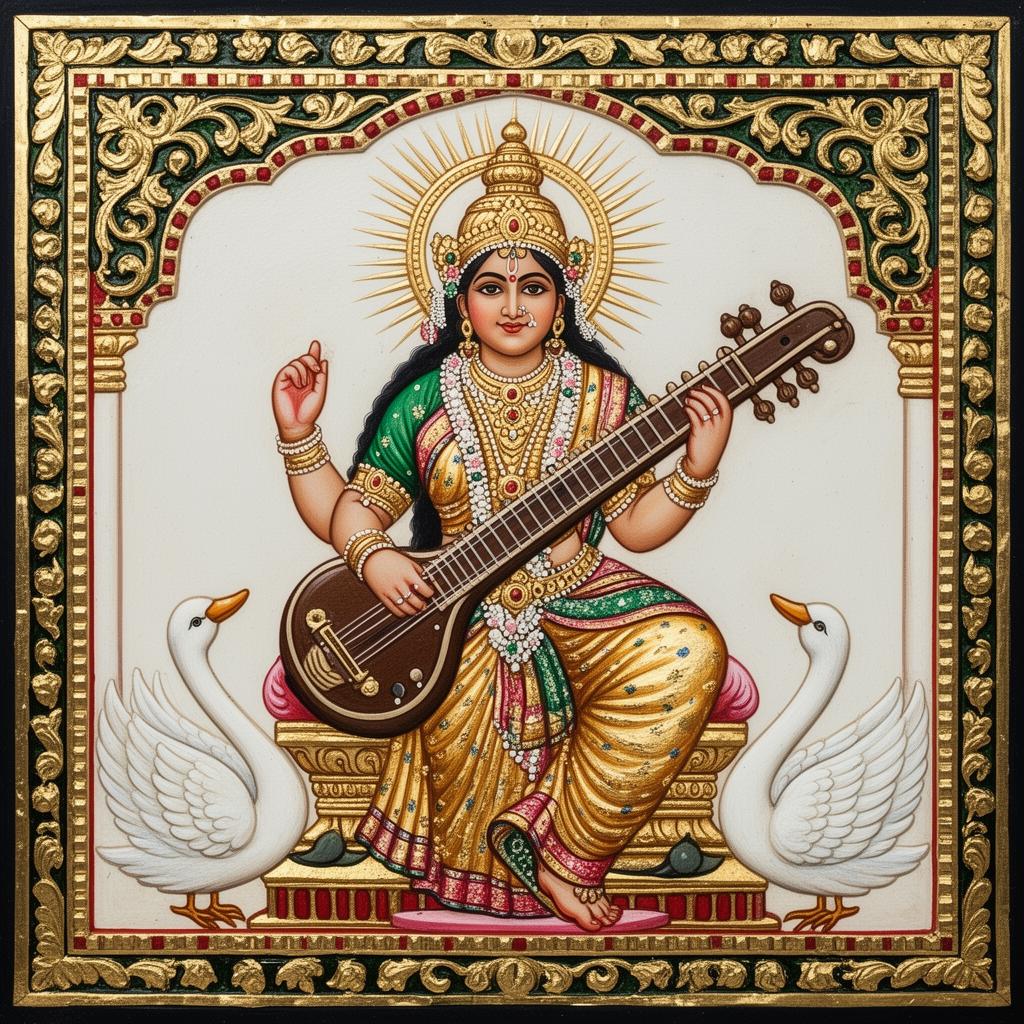
These paintings are known for their surface richness, vivid colors, and compact composition. The most distinctive feature is the use of 22-carat gold foil, semi-precious stones, and glass beads that give the paintings their characteristic three-dimensional appearance.
The themes are predominantly religious — depicting Hindu gods and goddesses, saints, and scenes from Hindu mythology. Lord Krishna, Goddess Lakshmi, Lord Ganesha, and Goddess Saraswati are among the most popular subjects.
Cultural Significance
A UNESCO-recognized art form that bridges devotion and artistry.
Sacred Tradition
Each painting is created as an act of devotion, following rituals and prayers handed down through generations of master artisans.
22-Carat Gold Foil
Genuine gold foil is meticulously applied to create the radiant, luminous effect that makes Sree Gandhaan paintings unmistakable.
Temple Heritage
Originally created to adorn the walls of South Indian temples, these paintings continue to bring divine energy into sacred spaces.
The Art of Creation
A meticulous process spanning weeks of dedicated craftsmanship.
Base Preparation
A wooden plank is prepared with a special paste of limestone and binding medium, creating the perfect surface.
Sketch & Outline
The deity's form is carefully sketched, following iconographic rules passed down through centuries.
Gold Foil Application
22-carat gold foil is painstakingly applied to ornaments, clothing, and architectural elements.
Gem & Stone Setting
Semi-precious stones and glass beads are embedded to create the iconic three-dimensional effect.
Final Painting
Vibrant natural colors are applied to bring the divine figures to life with rich, saturated hues.